

Friendship: is it worth it?
Lenten Missive #1

Thanks for taking the time to open this email! If you enjoy this post, giving it a ♡ and/or commenting is helpful. It tells Substack I’m worth reading and it tells me what you think about my writing (especially if you comment and tell me what you think about my writing).


Oops, pretend I sent this yesterday.
We’re dealing with kind of a classic situation over here in Apt 3 at the corner of [redacted] and [redacted], namely that I decided to take my ADHD meds yesterday, even though it was a Sunday, because I wanted to be sure I used my time productively before the snow started to fall. I knew I’d want to enter a mini-hibernation as soon as there was at least a two inch layer of icy white fluff muting the city outside.
Instead, I used my chemically induced focus to give myself my second tattoo of the year, to build my (first ever, yikes) headboard, and to clip my cats’ nails.
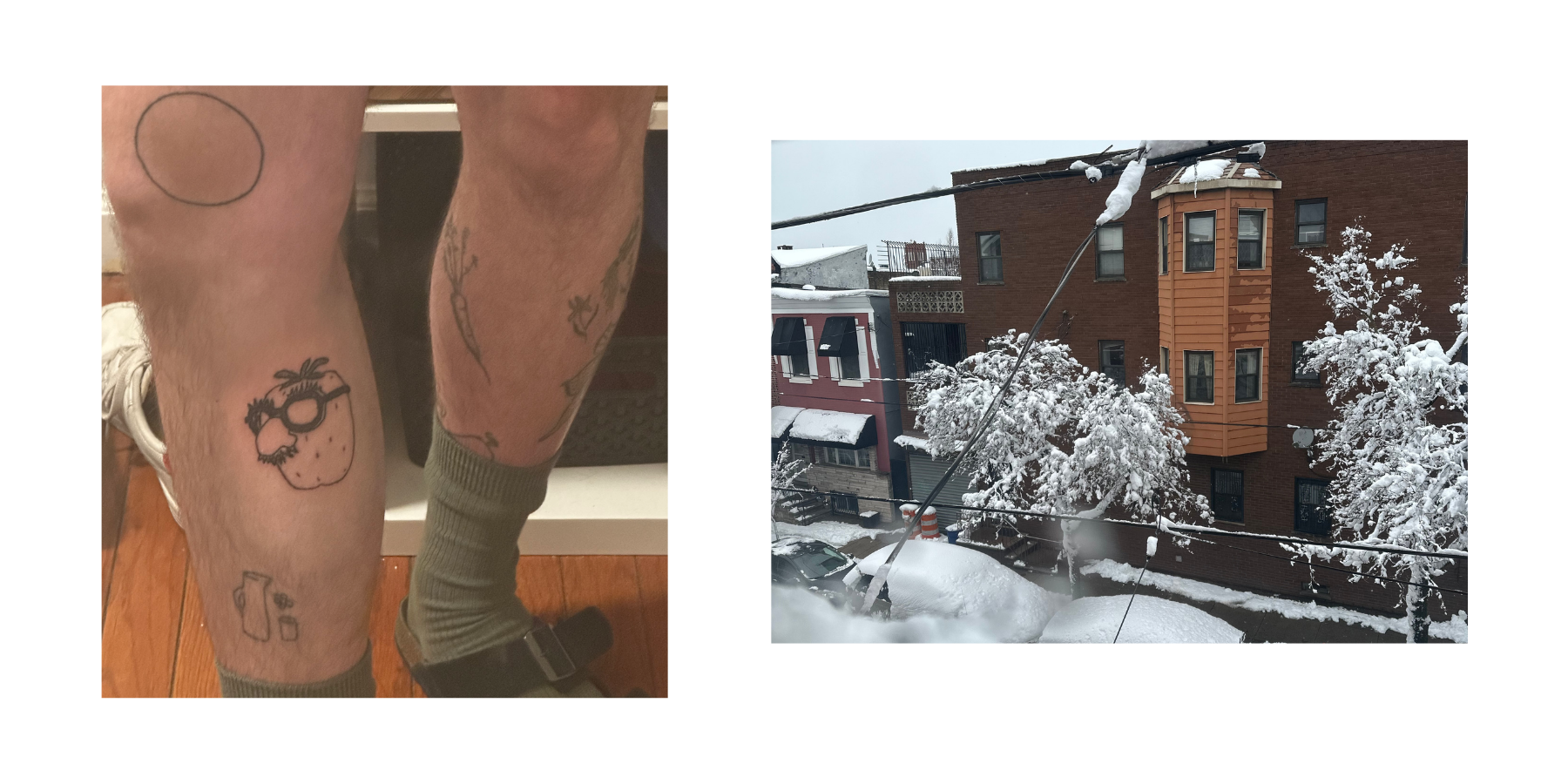
I did manage to do some school reading, by which I mean I had the artificial voice of Gwyneth Paltrow read to me about conceptions of virginity from late antiquity while I stabbed ink into my skin. This is for my final paper for my Mariology class, which is focused on using a process theology lens to reconsider Mary’s perpetual virginity. I don’t have a much clearer argument just yet, but once I do you will hear about it.
The other book I’ve been spending time with for school has been Spiritual Friendship by St. Aelred of Rievaulx. Again, for a final essay, though this one is about the “practice” of friendship and how it can operate ascetically as a way to connect you with the divine. St. Aelred in the Episcopalian tradition is the patron saint of LGBTQ+ people. In Catholicism, where we do not (openly) celebrate queers, he is just the patron saint of friendship.
If you’ve read any of Plato’s dialogues, you’re familiar with Spiritual Friendship’s format. In the work, Aelred plays a fictionalized version of himself, answering younger monks’ questions about the nature of Friendship. There are many interesting components of Aelred’s treatise, including when he names the three kinds of friendship (carnal, worldly, spiritual) and the three kinds of kisses (physical, spiritual, intellectual). Today, I wanted to share specifically what he says when one of those young monks, Walter, suggests that Friendship might be too lofty a goal to reach—it is, after all, hard work. Walter argues that he can “almost endorse the view of those who claim that friendship should be guarded against as a burden full of care and anxiety, not free from fear but subject to many sorrows.”
Honestly, Walter makes a fair point.
At this point in the dialogue, Aelred has already explained the trials of friendship, namely that to move from a worldly friendship to one that is truly “spiritual” you have to be mutually invested in one another and, perhaps more importantly, you must be deeply invested in your own uprightness. The role of a friend, according to Aelred, is to live the good and honest and charitable life that you hope to witness and benefit from in return, but not in exchange. No, for Aelred, the good life that we experience through friendship is selflessly self-sustaining. It’s circular in the sense that what we give out is almost instantaneously returned and in greater measure than it was given. The whole is always greater than the sum of its parts.
That sounds pretty good, to get more than you give, but it’s more complex than that, as you probably know. Sometimes (maybe even frequently, if you’re a recovering people pleaser like me) you give and you give, pouring yourself into a friendship, and you find yourself depleted. You risk the exchange and after handing over everything you have, you find nothing coming back your way. With empty arms, you stand and wait, hoping maybe you’ll get something back when your friend has more capacity or that you’ll figure out a way to recuperate what you’ve lost on your own. It’s not an uncommon experience, familiar enough that Walter’s suggestion is in response to this experience, to this risk. If you can’t guarantee mutuality, or even something close, why risk it?
Because a life containing friendship is the only life worth living, according to Aelred. To live in isolation, far from the potential harms that other people might cause through their clumsy attempts at love, is not a human life. But Aelred pushes farther than just rejecting the impulse to self-isolate.
“Those who claim that their lives should be such as to console no one and to be a burden or the occasion of grief to no one, who derive no joy from others’ success and inflict no bitterness on others with their own perversity, I would call not human beings but beasts,” he says. “They have only one goal: neither to love nor to be loved by anyone.”
Aelred believes, and I believe, that a determination to not cause harm and to not be a burden is akin to opting out of friendship. It is akin to opting out of love. I haven’t always believed this, but after some failed friendships that ended too soon and some failed friendships that lasted too long, I see it as an unshakeable truth.
Aelred saw himself as building himself on a foundation of friendship, intimately connected with the rest of the men who lived with him in religious community: arguing with each other, mourning with each other, working together to make ends meet, and worshipping an eternal Trinity together. In all the difficult ways possible, they depended upon one another. You and I don’t have to go that far to be in deep community and friendship these days (though, sometimes, running off to a monastery in the woods has a certain appeal…). Instead, we can build our lives on a foundation of friendships that play out in the world. This is not to say that it’s easy, just that it’s worth it.
Friendship is a risk, one of the best risks to take, one that you really must take. If you don’t, you’ll end up living in darkness, for, as Aelred says quoting Cicero: “those who banish friendship from life seem to pluck the sun from the universe, for we have no better, no more delightful blessing from God.”

I’m interested in how these friendships we create in and amongst the hardest features of modern life can maintain their integrity. How can they stay strong, not in a “morally upright” sense, but in the sense that integral friendships, if they are as Aelred describes, seem to require stronger foundations to stand upon than we see all that often in the world today. Do you agree? What keeps your strongest friendships strong? What weakens them?
Always a lot of credit goes to the people who have been my teachers, both directly and through their freely shared knowledge, and so many books.